
01635 40311
01635 40311
01635 40311

Rebuild your smile securely, even after advanced gum disease.
If you’ve been told you may need dentures, or that you don’t have enough bone for implants, a detailed assessment may reveal more options than you think.
All-on-4 treatment is designed for patients whose teeth have become loose, unstable or beyond predictable repair.
Through careful digital planning, implants can often be placed using the bone that remains, creating a fixed bridge that restores stability and function.

✔ Advanced CT digital planning
✔ Experienced implant team
Does this feel familiar?
Full mouth rehabilitation is usually considered when dental issues are no longer isolated to a single tooth. It’s often the result of years of previous treatment, wear, or structural changes that now need to be addressed together.
Your teeth feel less stable
than they used to
Eating certain foods feels uncomfortable. You avoid biting directly. You feel unsure how long things will hold.

Repairs feel temporary
Appointments become more frequent.
Small fixes don’t seem to last. You’re told
the bone support has reduced.
The conversation turns
to dentures
You’re advised extractions may be needed.
Dentures are presented as the next step.

You’ve been told there isn’t
enough bone for implants
It can feel like the decision has already
been made for you.
This is often the stage where patients feel they are running out of options.
But this is also the point where structured implant planning can change the direction of the conversation.
A secure alternative
to dentures
All-on-4 treatment is designed for patients whose remaining teeth are no longer stable.
A small number of implants are placed into the jawbone to support a fixed bridge that replaces most of the teeth in the upper or lower jaw.
Because the bridge is supported by implants placed into bone, not resting on the gums, it provides far greater stability than a removable denture.
In many cases, temporary teeth can be fitted on the same day following careful planning. The focus is stability and predictability.
Told you don’t
have enough bone?
We hear this often.
Gum disease reduces the bone that supports your teeth, and it can sometimes appear that implants are no longer possible.
However, reduced bone does not automatically mean treatment isn’t achievable.
Using detailed CT scanning and digital planning, we assess exactly what bone remains and how it can be used safely.
In most cases, a structured approach makes treatment possible, even when patients have previously been told otherwise.
You may have more options than you’ve been told
If you are living with unstable teeth due to advanced gum disease, or have been advised that dentures are your only option, a structured assessment may reveal alternatives.
Reduced bone does not automatically mean treatment is impossible.
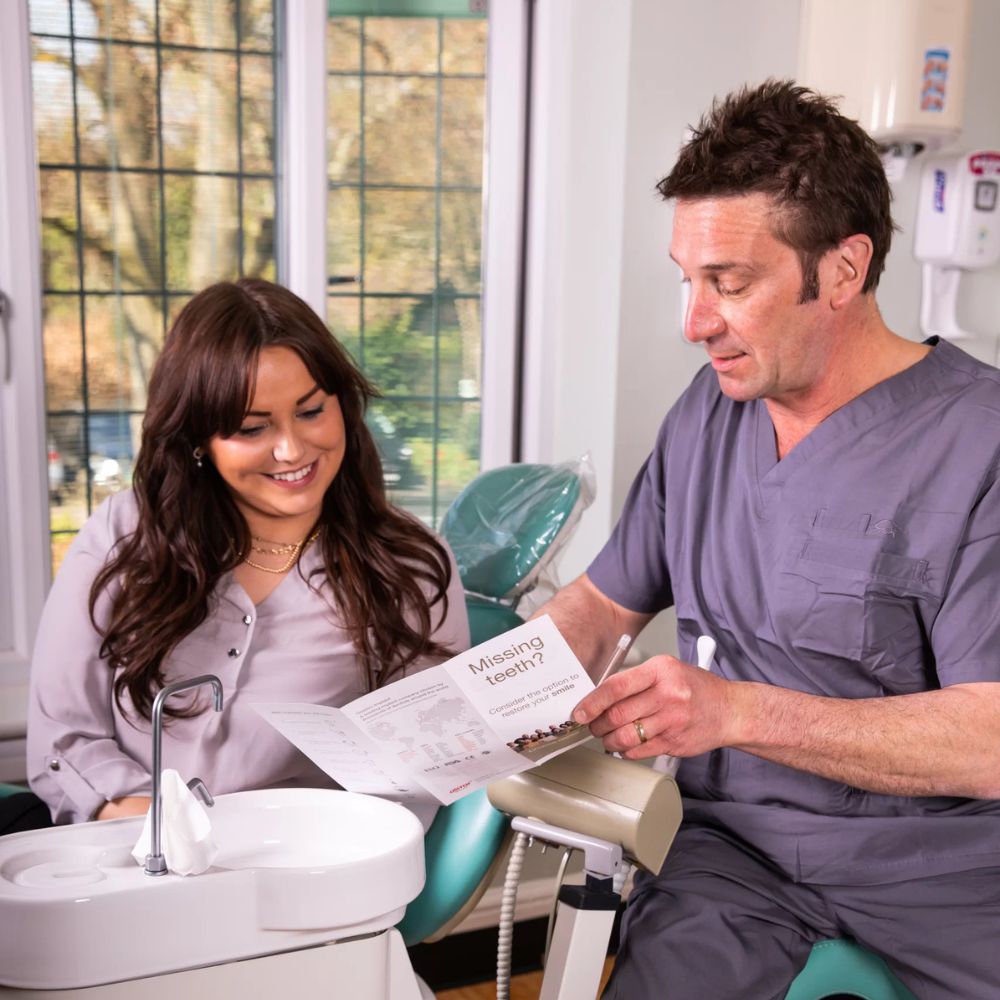
The purpose of your consultation is not to commit you to surgery.
It is to understand your situation properly, assess what is achievable, and give you a clear and honest recommendation.
A thorough clinical assessment
Advanced digital imaging
A clear explanation of your options
Time to consider your next step
Private implant care. Clear answers. No obligation.
Patient Stories
Hear directly from patients as they share their journeys, in their own words.
The Planning Process
Successful implant treatment begins long before the day of surgery.
It is this preparation that makes same-day teeth possible in appropriate cases.
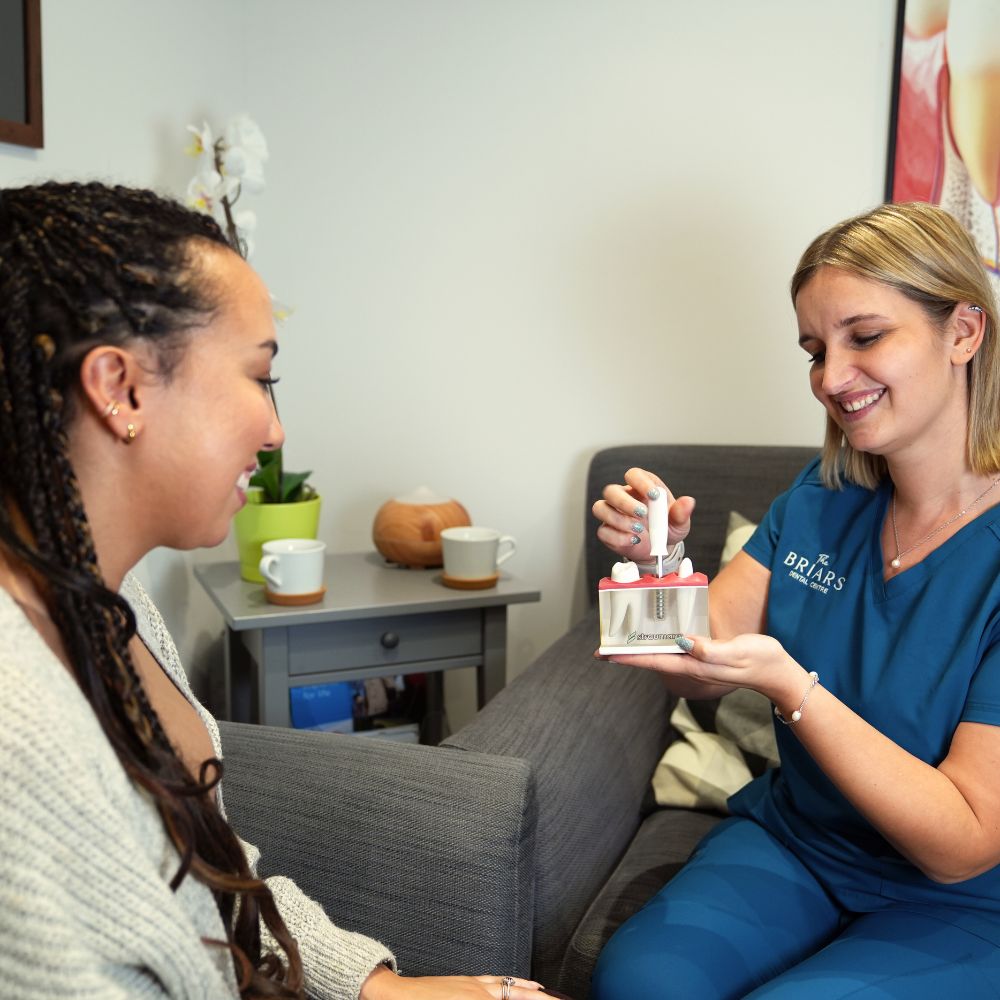
1. Comprehensive Assessment
We begin with a detailed clinical review of your gums, bone levels and overall oral health to understand whether implants are appropriate.
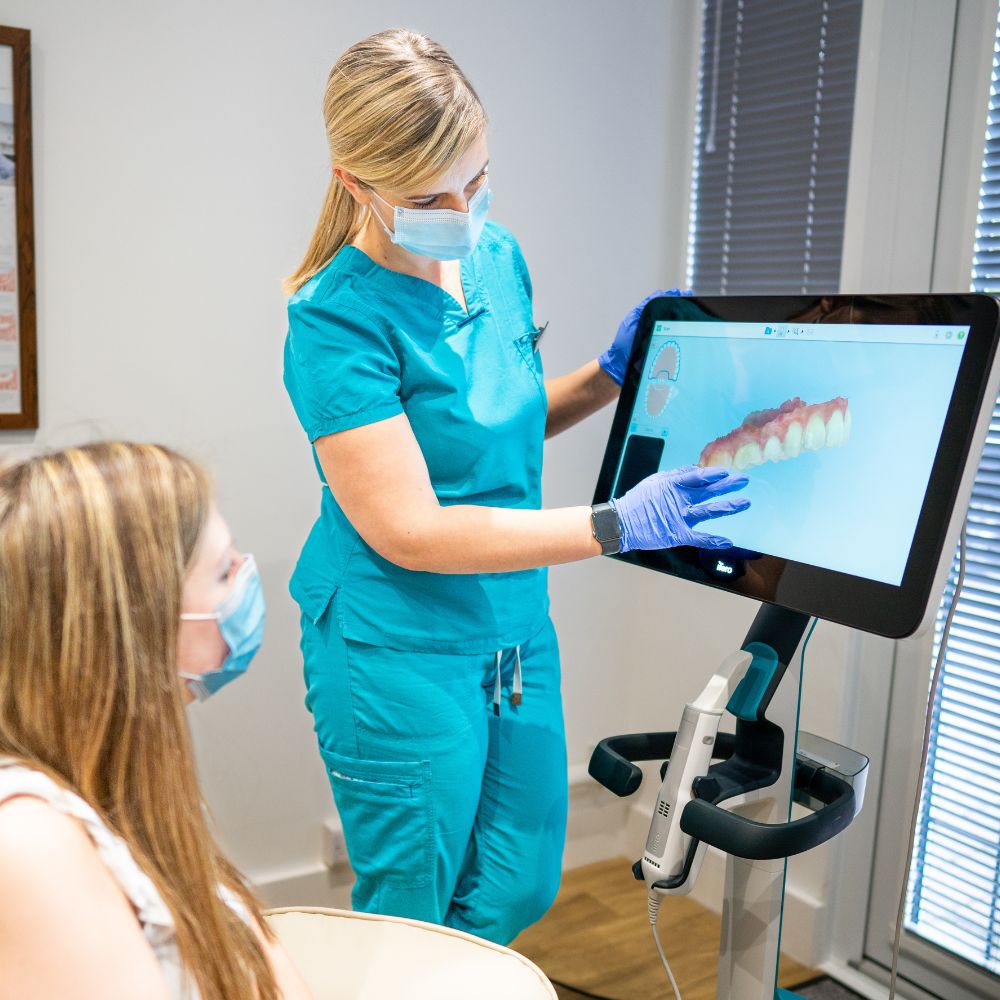
2. Advanced digital imaging
CT scanning allows us to assess the quality
and volume of bone available.
A digital intra-oral scan creates a precise model of your mouth. These are combined to plan treatment accurately.
3. Crown-first planning
The position of your final teeth is designed first. The implants are then positioned to support that planned result.
4. Guided placement
From the digital plan, a custom surgical guide is created.
This allows implants to be placed at the exact depth and angle intended, creating a safe and predictable procedure.
Talk To The Team
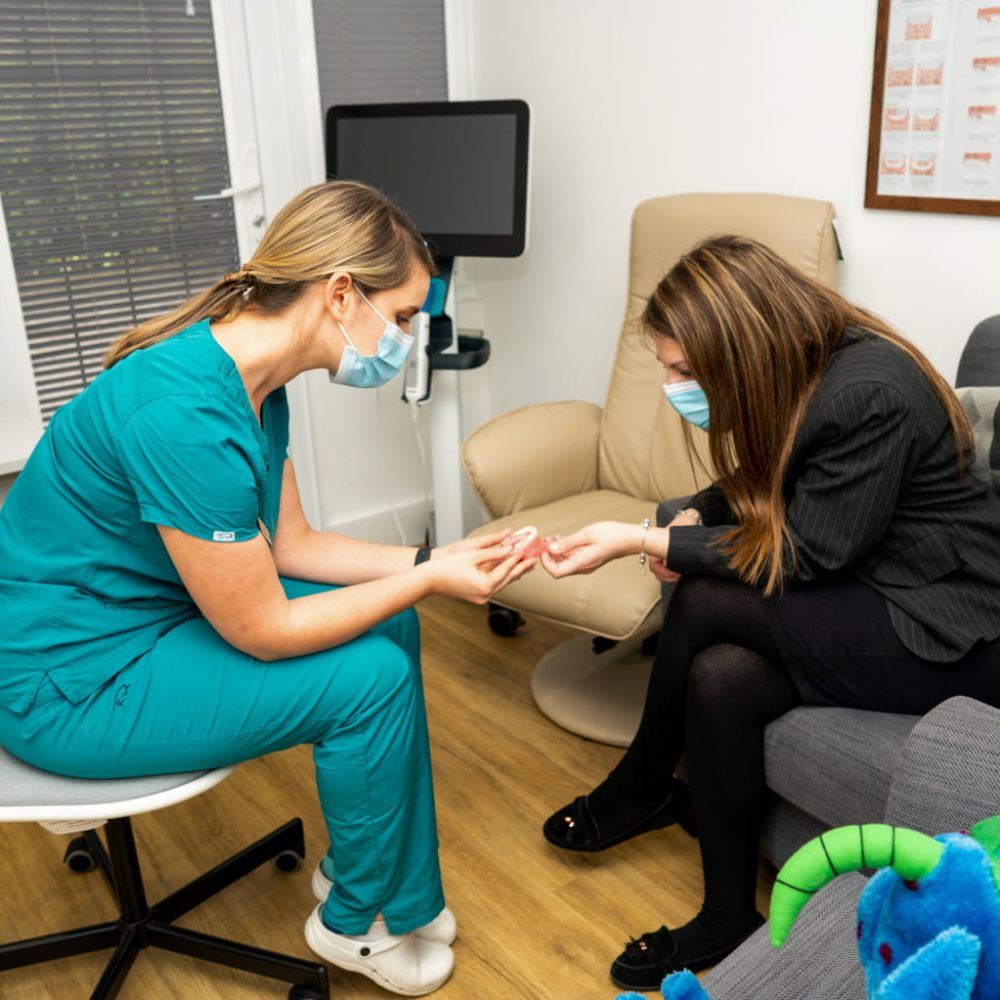
The purpose of your consultation is not to commit you to surgery.
It is to understand your situation properly, assess what is achievable, and give you a clear and honest recommendation.
Please note: The Briars Dental Centre is a private practice and not accepting NHS patients.
Why Choose Us
Experience hands. Careful assessment.
Full-arch implant treatment requires careful planning and clinical experience.
Your assessment and treatment are carried out by an experienced implant team who regularly manage cases involving advanced gum disease and reduced bone support.
Every case is reviewed individually. The decision to proceed is made carefully, based on clinical findings and long-term predictability.
Our approach is not about rushing into treatment. It is about understanding your situation fully and advising honestly.
You will always be given clear explanations, realistic expectations and time to make the right decision for you.
Digital planning with DSD
Experienced in advanced restorative dentistry
Structured, phased treatment planning
Clarity first. Treatment second.